
Canopies for the Lot
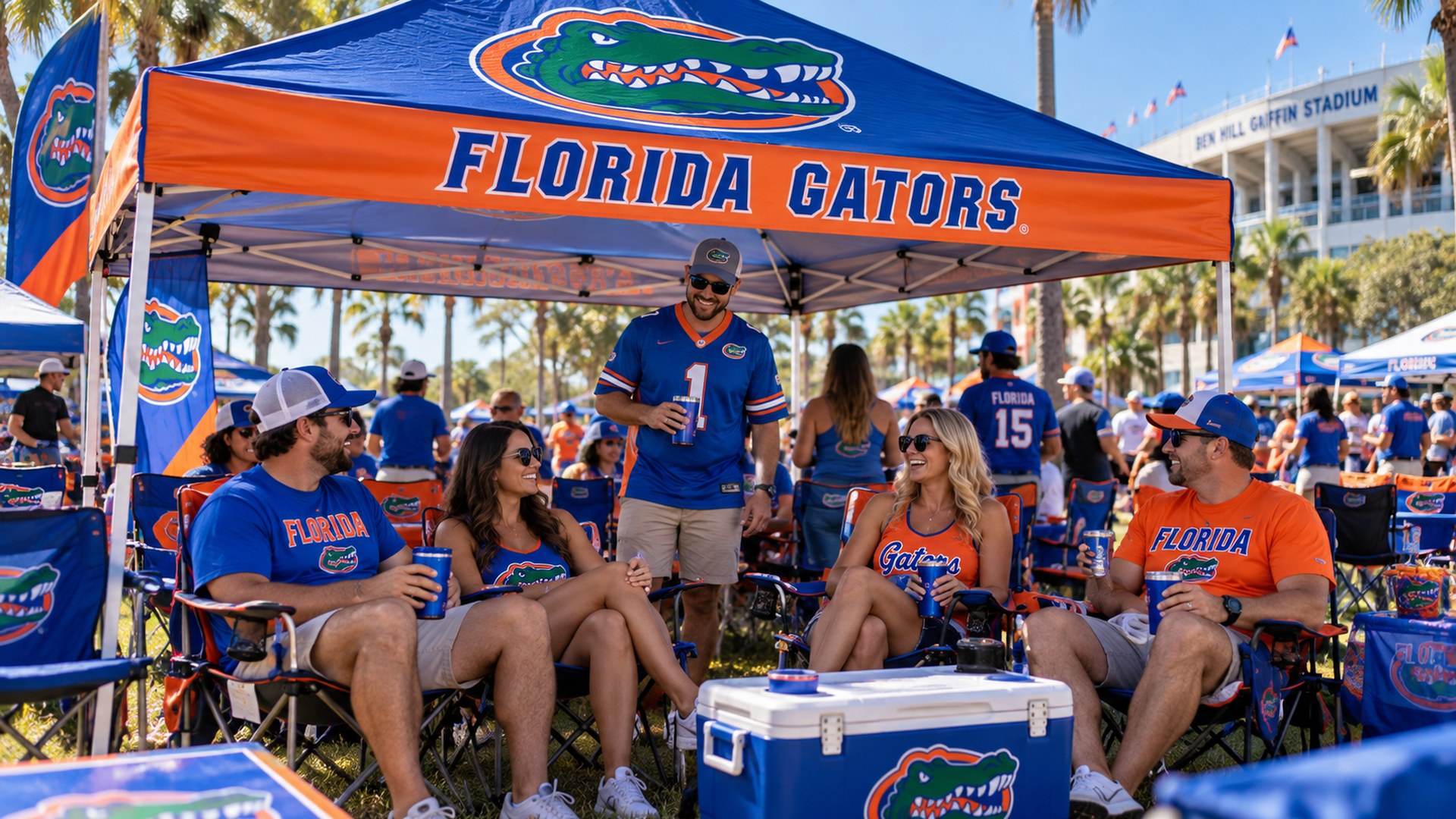
Start with sides and weather — then pick the frame. A bare top is half a shelter. Enclosures turn a pop-up into something that works when wind or rain shows up.
Confirm your lot’s tent, stake, and footprint rules in Guides before you invent a fortress.
Sides & enclosures first
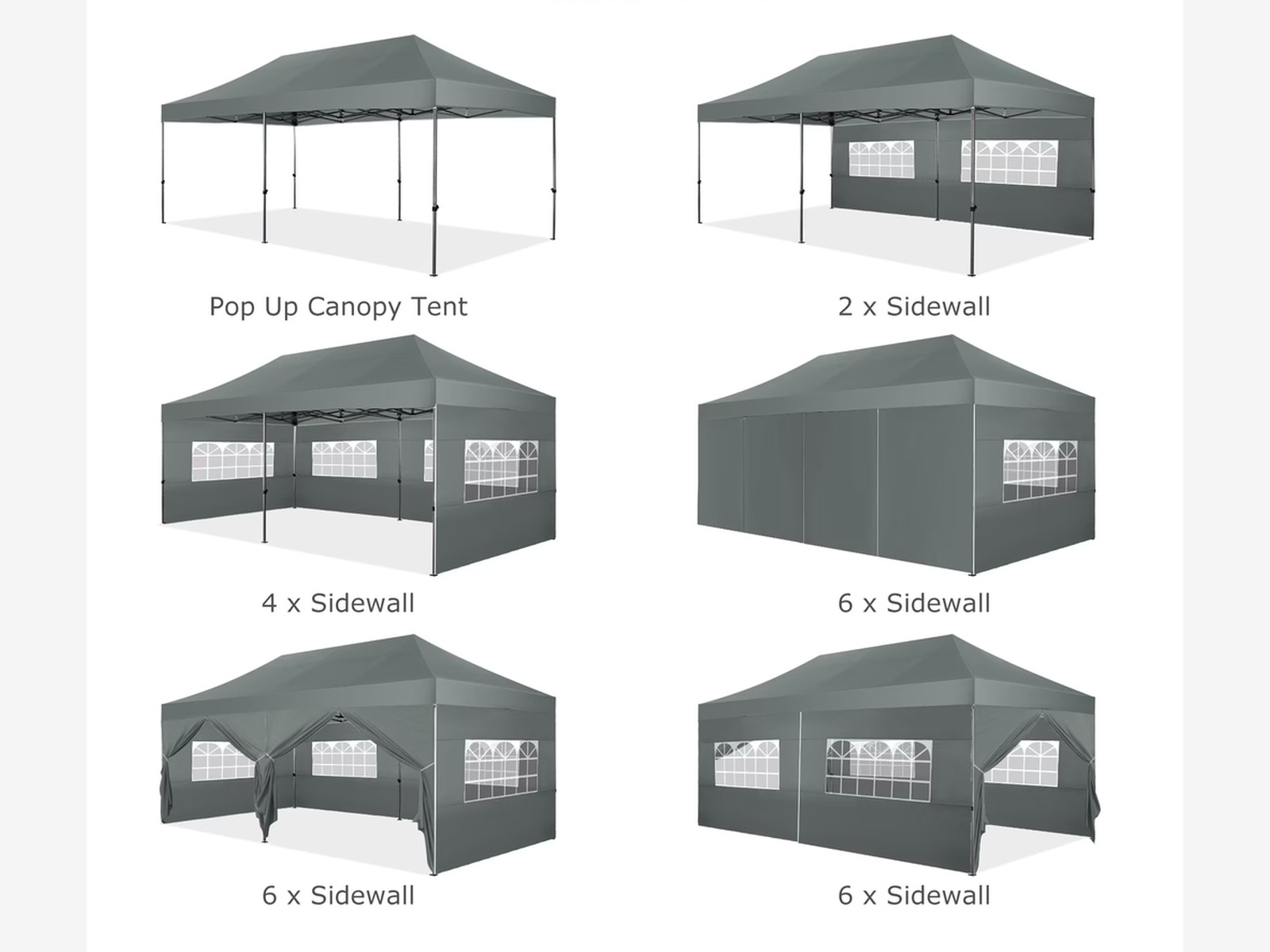
One or two windward panels beat a sealed box that turns into a sail. Rain wants three sides and a cook opening. Heat wants shade without trapping exhaust. Cold wants walls that hold warmth from a safe heater zone — never a sealed grill or generator.
| Weather | Side play |
|---|---|
| Wind | Windward wall(s); leave a lee opening so it doesn’t balloon. |
| Rain | Three-sided or full enclosure; leave the cook side open. |
| Sun / heat | Light top + optional sun-side wall; keep airflow. |
| Cold | Sides hold heat — open wall for any combustion; see Heaters. |
Enclosure types: zip-on / hook-on walls matched to your frame · mesh for bugs + breeze · clear panels for light + wind break · improvised tarps only if they can’t slap the grill or trip a lane.
Dual-use: same walls cut glare for a Tailgate TV and block wind for the food table.
Size guide (ballpark)
| Footprint | Fits (rough) | Notes |
|---|---|---|
| ~8×8 / truck canopy | Tight stall, 4–6 standing | Neighbor-friendly; low sail. |
| ~10×10 team | Most crews’ starter | Classic lot size; weights every leg on asphalt. |
| ~10×20 / larger | Bigger lots, big crew | Needs space + more weight; check lot max. |
| Carport / commercial | Serious multi-stall setups | Heavier haul; often overkill for one spot. |
Leave a walk lane. Don’t eat your neighbor’s stall.
Styles — pick for the lot you park in
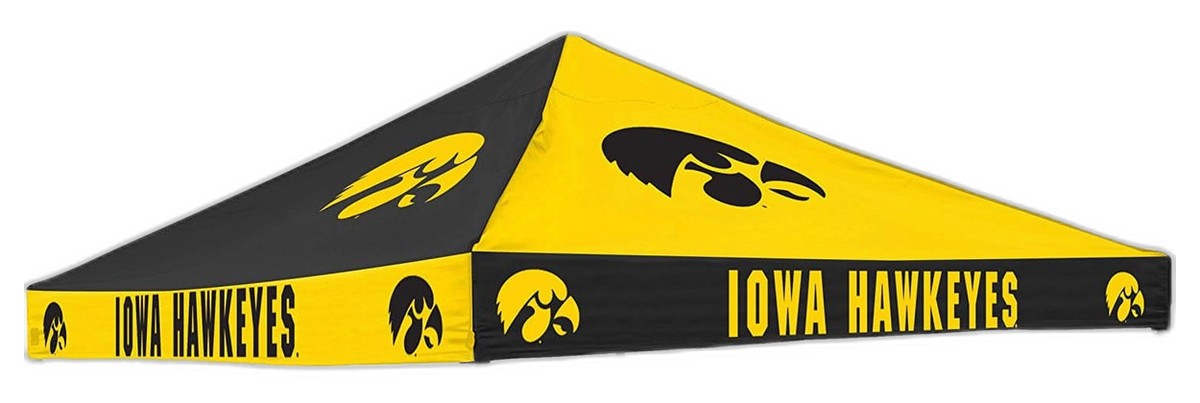
Team canopy (~10×10 starter)
The default. Fast up, team colors optional, sides usually available. If you’re buying your first real shelter and the lot paints one car per stall, start here.
When best to use: Standard college or NFL asphalt lots with a normal crew (8–15). Home weekends where you want shade + optional walls without a trailer.
Pros: Easy haul for two people. Known size — accessories and wall kits are everywhere. Fast enough that you’re not still wrestling poles at kickoff. Scales from “just tops” to full weather with the right enclosure kit.
Cons: Cheap frames walk in wind if you skip weights. Off-brand wall kits that “almost” fit never zip clean. On a truly tight painted stall, 10×10 can crowd the neighbor line.
Tip: Buy the wall kit that matches the frame brand. Weight every leg on asphalt.
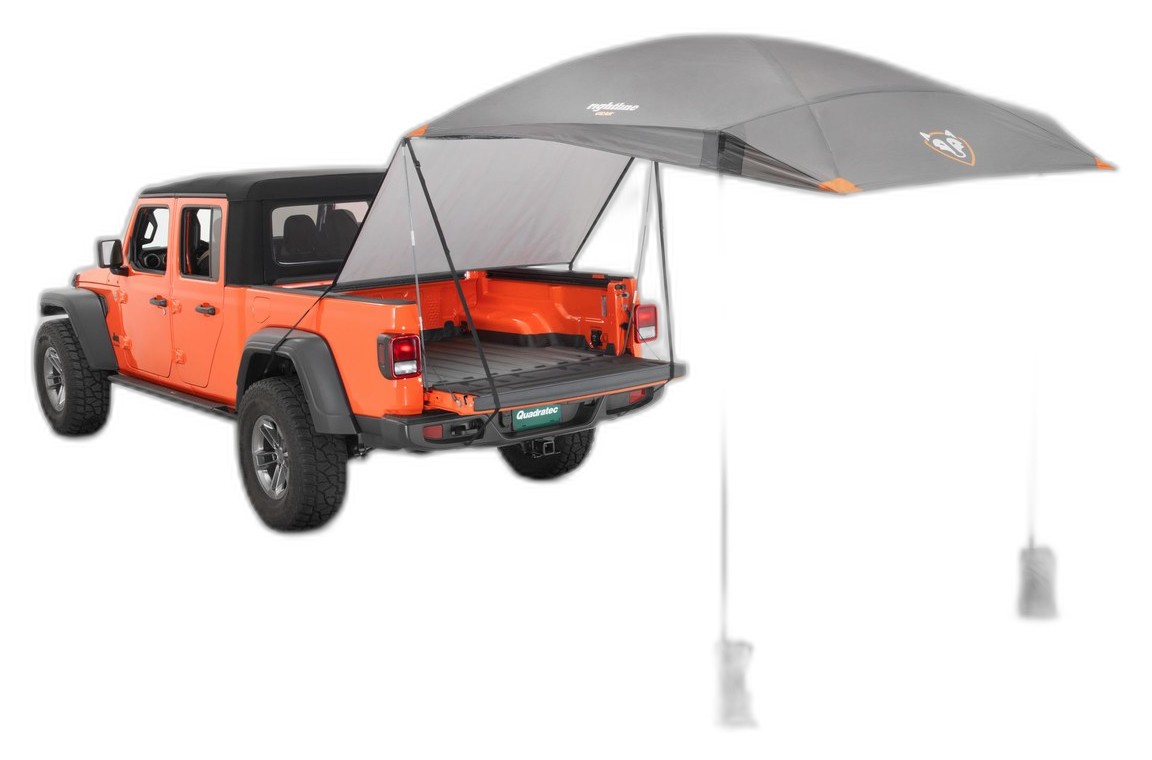
Truck canopy (tight lots)
Shorter footprint that hugs the truck or a skinny stall. Less sail than a big square — which matters when the lot is painted for one car, not a party.
When best to use: Narrow stalls, truck-bed-centric setups, lots where a full 10×10 eats the walk lane. Early arrivals who still want shade without claiming two spaces.
Pros: Fits tight lots. Lower wind profile. Often pairs cleanly with the truck as a back wall.
Cons: Less standing room for a full spread. Harder to host a big crew under one roof. Side kits can be harder to find than for team 10×10s.
Tip: Great when the lot is painted for one car. Don’t pretend it’s a banquet hall.
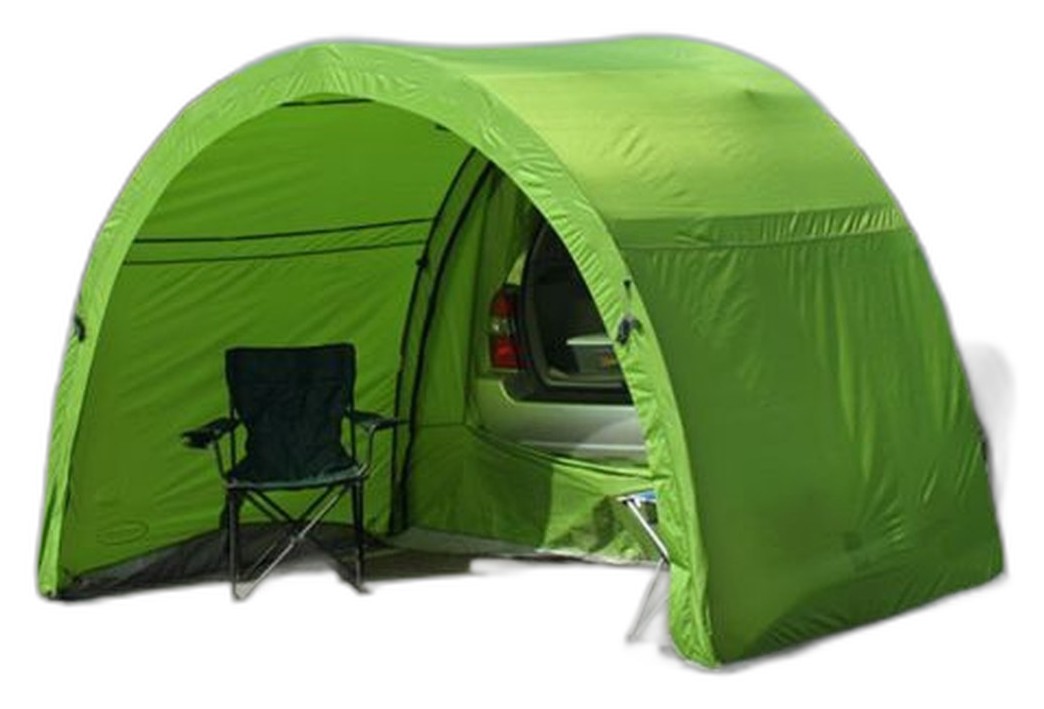
Dome
Curved top, often more headroom in the middle. Sheds rain well and feels more “tent” than popup square.
When best to use: Rain-prone seasons, overnight lots, crews who want a roomier center without going 10×20.
Pros: Rain sheds cleanly off the curve. Solid shelter feel once up. Good winter/side-wall energy when the lot allows.
Cons: Setup can be slower than a straight pop-up. Sides and accessories are less universal — you’re often locked to that brand’s kit. Practice once at home.
Tip: Game day isn’t the time to learn poles.
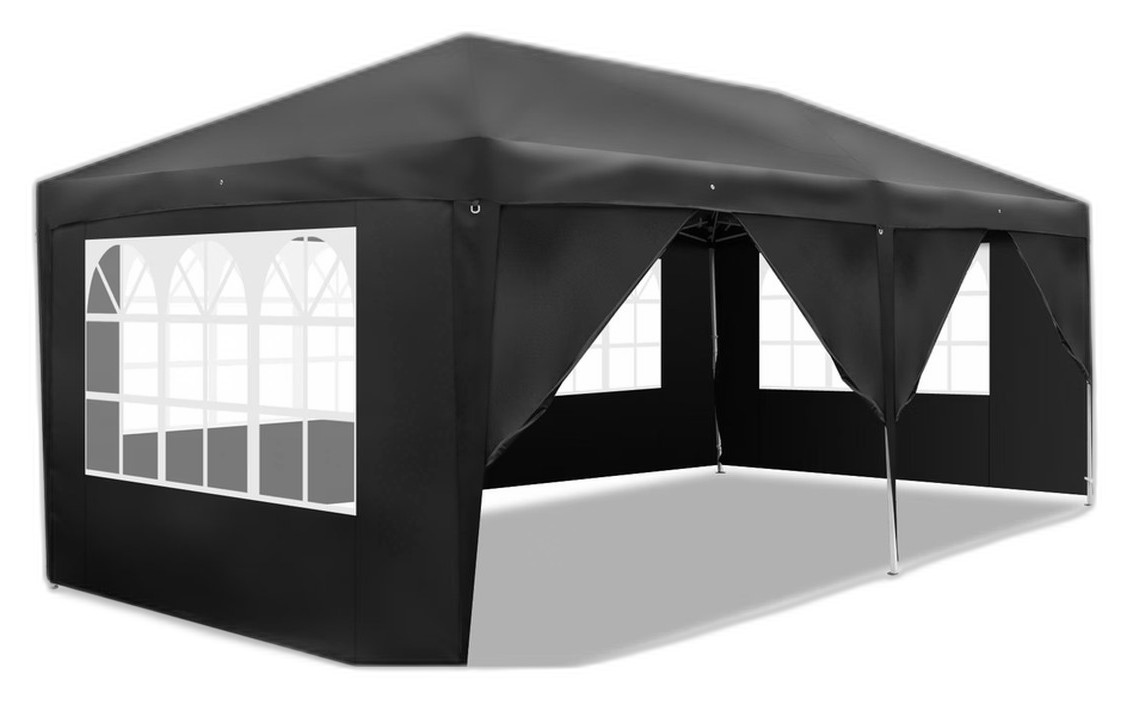
Larger / bigger lots
10×20-class or multi-bay shade when the lot actually gives you room. Whole crew + table under one roof — if the guide and the paint lines agree.
When best to use: Multi-stall permits, open grass lots, big family crews hosting every home game. Not for one painted space.
Pros: Real covered work zone. Room for food table + seating + screen without living outside the shade.
Cons: Heavy. Loud in wind. Often against footprint or height rules. Needs serious weight and more hands at setup.
Tip: Confirm stall count and height limits before you leave the driveway.
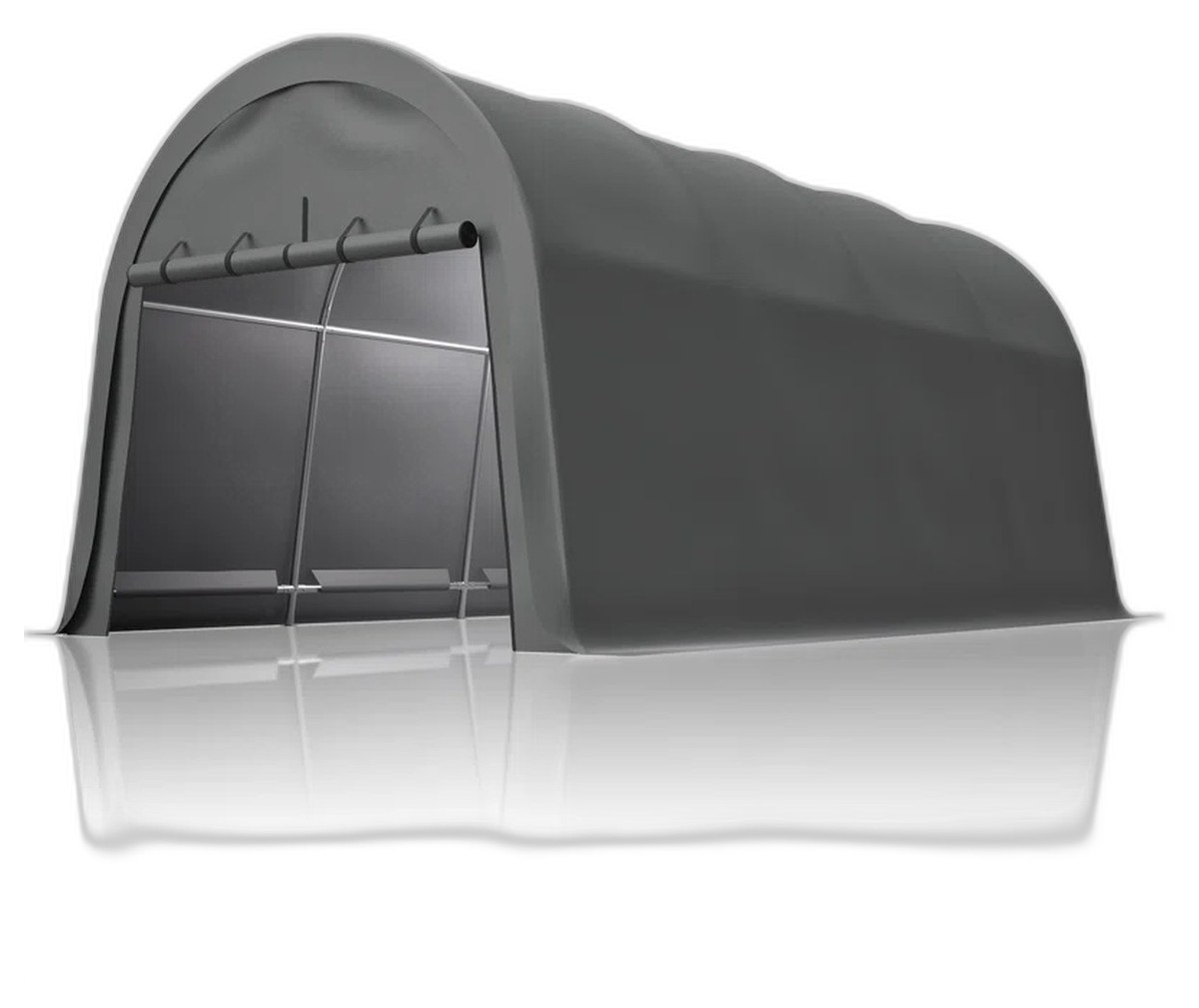
Carport-style
Long, peaked, driveway energy. Think temporary structure, not a casual pop-up.
When best to use: Multi-grill crews, long cook days, lots that allow bigger temporary shelters. Homegate driveways where you want a covered work aisle.
Pros: Huge covered zone. Good for multi-grill and long prep tables.
Cons: Big haul. Needs serious anchoring. Not every stadium lot allows it — many don’t.
Tip: Stakes, weights, guy lines. Treat it like the temporary building it is.
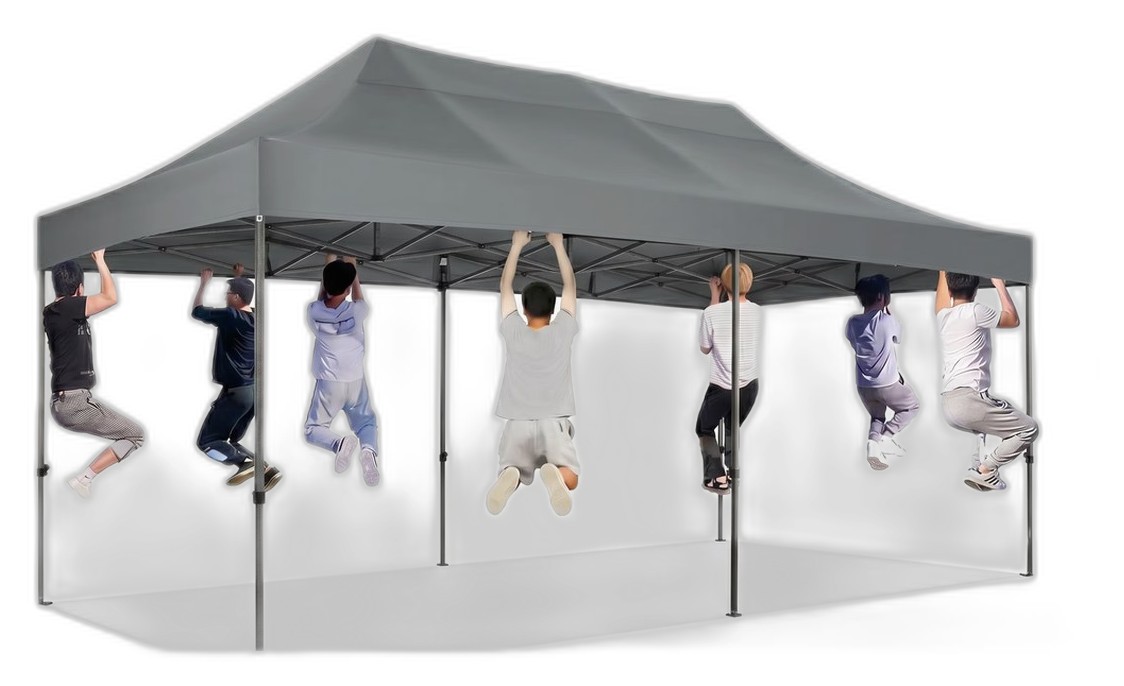
Commercial-grade
Thicker legs, better joints, built for repeat setup. The frame you buy when cheap pop-ups have already eaten a season of replacement money.
When best to use: Host every home weekend. Windy campuses. Anyone who’s already broken two light frames.
Pros: Survives wind better. Lasts seasons. Joints and legs feel like equipment, not toys.
Cons: Costs more. Heavier to lift. Overkill for a once-a-year bowl trip.
Tip: Worth it if you host weekly — cheap frames are a subscription you didn’t mean to buy.
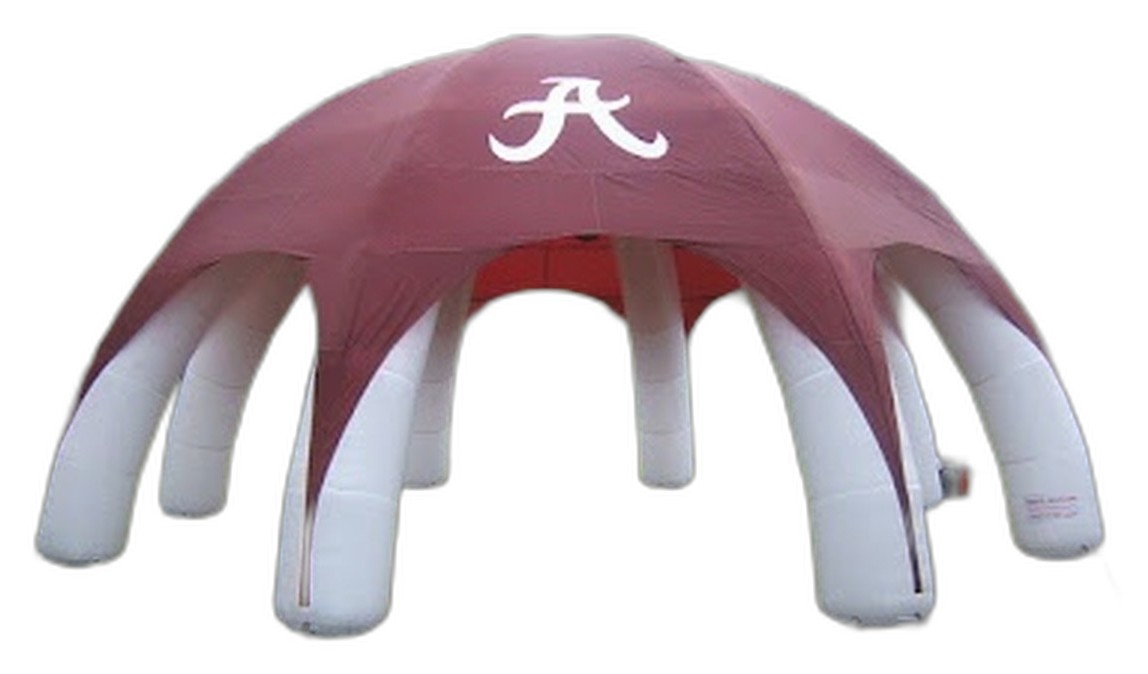
Inflatable
Air-beam frames that go up with a pump. Wow factor is real — so is the puncture and power story.
When best to use: Crews with a charged pump plan, lots that allow the footprint, and days when you want fast setup theater. Not for “we forgot the pump.”
Pros: Fast wow-factor. No pole wrestling. Distinct look on a crowded lot.
Cons: Needs power/pump. Puncture risk. Wind management is still real — inflated is not magic. Deflated mid-day is not a shade plan B.
Tip: Patch kit + charged pump, or don’t bother.
Frame, weights, tear-down
- Stake in dirt where allowed. On asphalt: weights every leg.
- Grill outside the enclosed box (or open sky + wind screen that doesn’t trap CO). Generators stay downwind, outside the tent — Power.
- Wet walls go home spread to dry. Mold kills next week.
- Fans nest under the same shelter story: Fans.
Accessories
Secure your setup. The frame is the buy — these are the pieces that keep it on the asphalt and working in weather.
Weights
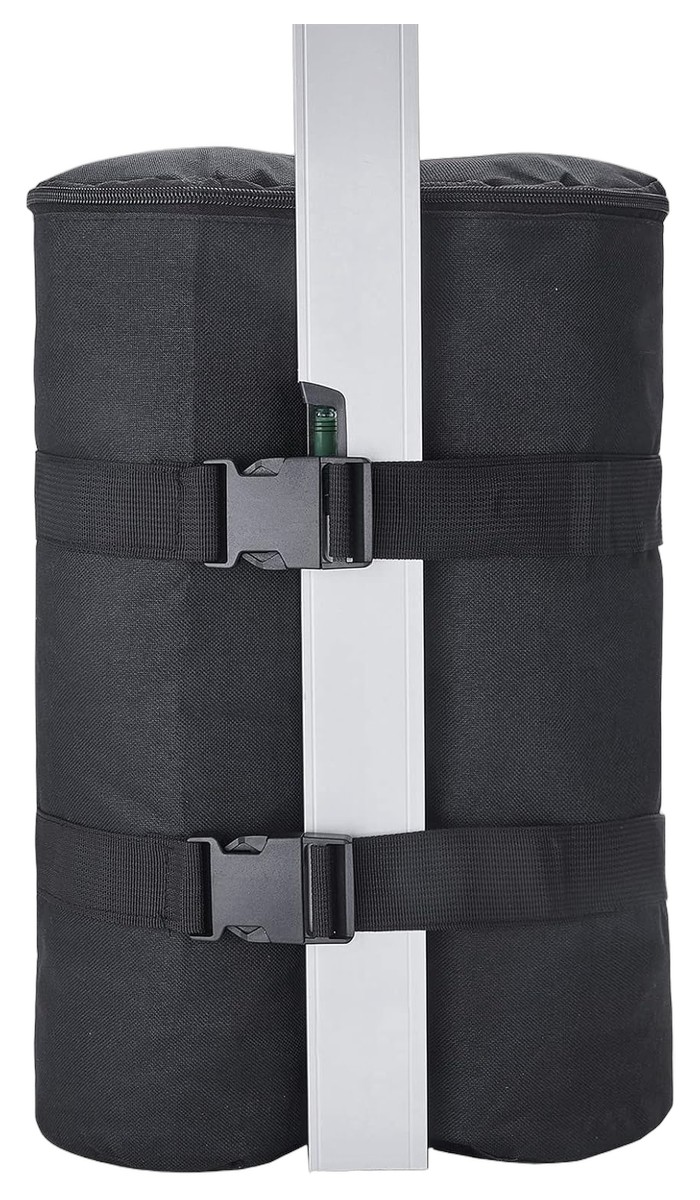
Weights — every asphalt leg
On painted lots you can’t stake. Weight every leg or watch the tent walk.
Sandbag style — fill on site or pre-load. Easy to haul empty. Slow if you’re filling from a bag in the wind.
When: Most asphalt lots; crews who want adjustable weight.
Pros: Packs flat empty. Cheap. Stackable.
Cons: Fill time. Wet bags get heavy and moldy if you store them wet.
Plate style — steel or cast plates that drop on the foot or clamp the leg.
When: Repeat hosts who hate filling bags every week.
Pros: Fast. Known mass. Clean trunk if they’re dry.
Cons: Heavy haul. Need enough plates for every leg.
DIY (buckets / PVC) — concrete-filled buckets or PVC pipe sleeves that slide over the foot.
When: Homegate or crews who already built a weight kit.
Pros: Cheap per pound. Custom fit.
Cons: Ugly if you care. Messy to pour. Don’t tip a bucket into the walk lane.
Tip: Weight every leg. One empty corner is how tents fly.
Stakes
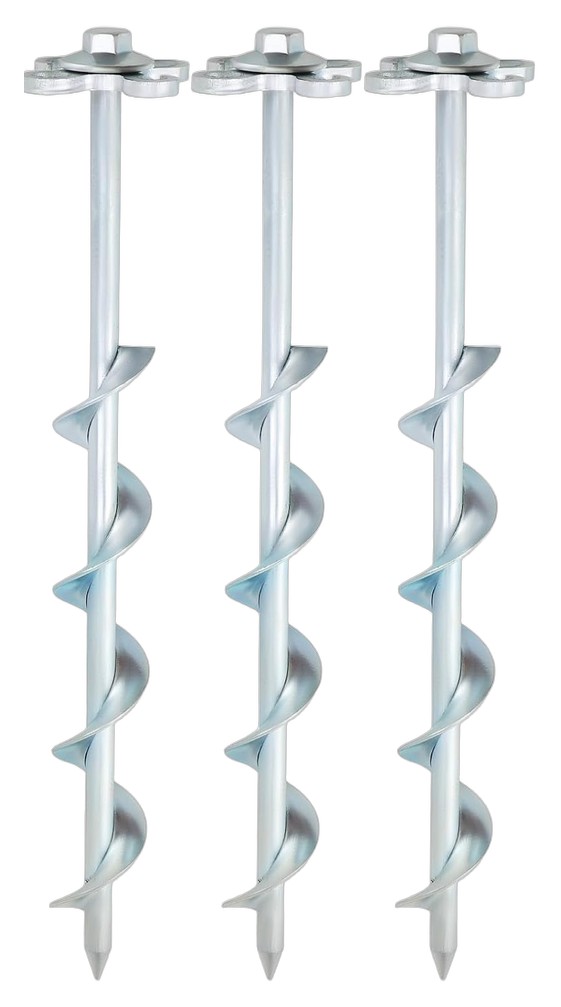
Stakes — dirt & grass only
Where the lot allows dirt or grass, stakes beat hoping weights are enough. Confirm stake rules first.
Drive-in — classic tent stakes. Hammer and pull.
When: Soft dirt, grass lots, quick setups.
Pros: Fast. Cheap. Everywhere.
Cons: Weak in hardpan. Easy to bend. Useless on asphalt.
Screw-in — auger-style that twist into soil.
When: Firmer ground, windy grass lots, longer days.
Pros: Better hold. Less “pop out” in gusts.
Cons: Slower. Needs a tool or strong wrists. Still not for pavement.
Tip: Bring a puller. Lost stakes are how you leave holes and bad neighbor energy.
Sidewalls
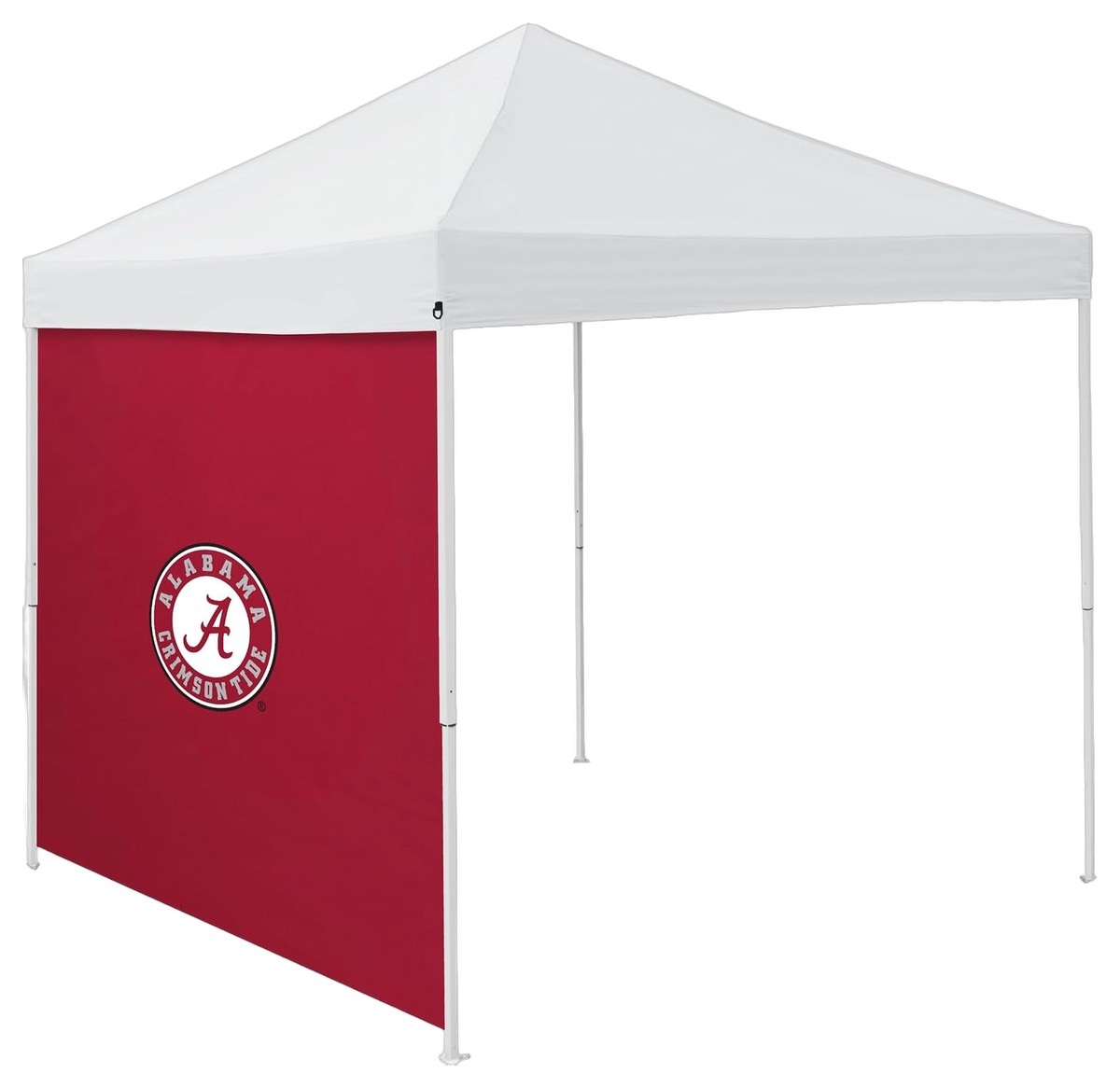
Sidewalls — weather on purpose
Walls turn a top into a shelter. Match the kit to your frame. Weather play and the configurations graphic live under Sides & enclosures.
Solid wall — full fabric panel for wind, rain, and cold hold.
When: Windward side, rain, cold opens with a safe heater zone.
Pros: Real weather block. Privacy. Glare cut for a TV.
Cons: Sail if you seal every side. Traps grill/generator exhaust — leave a cook opening.
Mesh wall — bug screen + breeze.
When: Hot buggy lots where you still want airflow.
Pros: Bugs out, air in. Less sail than solid.
Cons: Weak rain/wind block. Not a winter wall.
Team logo wall — branded panel; identity + shade.
When: Home weekends when you want the spot to read as yours from the drive lane.
Pros: Find-us energy. Same weather job as solid if it’s full fabric.
Cons: Brand kits cost more. Still a sail — don’t close every side.
Window wall — clear panel for light + wind break.
When: You want to see the lot without opening a full wall.
Pros: Light in. Wind cut. Watch for friends.
Cons: Scratches. Glare. Condensation in cold/rain.
Tip: One or two windward panels beat a sealed box. Grill and gen stay outside or on an open wall — Power · Heaters.
Simple misc (bullets)
- Straps, ratchet ties, and guy lines for wind days
- Clips and S-hooks on the frame
- Hanging organizers / shelves
- Flag and banner mounts (the pole hardware) — cloth and identity → Customize YOUR Tailgate
- Cup hooks
- Ceiling nets for soft gear
- Rain gutters / valance channels if your kit supports them
Pack weights with the canopy. Clips, ties, and a spare foot live in the Tailgate Kit. Mood lights → Customize · Canopy lights.
Weight the legs, add sides when weather asks, leave the cook fire room to breathe.
I Love To Tailgate — competent fun includes a shelter that stays put.
More in Gear · Tailgate Finds · Rituals